Mostrar mensagens com a etiqueta Portugal. Mostrar todas as mensagens

domingo, 10 de junho de 2012

EURO 2012 - Portuguese national team


Best EURO performance: runners-up 2004

Coach: Paulo Bento

Leading scorer: all-time – Pauleta (47); current – Cristiano Ronaldo (32)
Most appearances: all-time – Luís Figo (127); current – Cristiano Ronaldo (90)

Association formed: 1914

Nickname: Selecção das Quinas (Team of Shields)


Since reaching the UEFA EURO 2004 finals, Portugal have become fixtures in the knockout stages of major tournaments. Semi-finalists at the 2006 FIFA World Cup and quarter-finalists at UEFA EURO 2008, they were unlucky to encounter eventual winners Spain in the last 16 in South Africa two summers ago. A fifth successive UEFA European Championship final tournament was in jeopardy when Paulo Bento replaced Carlos Queiroz two games – and just one point – into UEFA EURO 2012 qualifying. He made an immediate impact, culminating in a resounding play-off triumph against Bosnia and Herzegovina.

UEFA EURO 2012 qualifying

Group H: runners-up
Play-offs: Bosnia and Herzegovina 0-0, 2-6 Portugal (2-6 agg)
Leading scorer: Cristiano Ronaldo (7)
Ever-presents: Raul Meireles, Nani (10)

Bento oversaw five wins but defeat in Denmark left them second in Group H. They beat Bosnia and Herzegovina 6-2 – the biggest winning margin in the play-offs – despite a goalless opener in Zenica. Cristiano Ronaldo took his international tally to 32 goals with two in the second leg, going level with Luís Figo in third place on Portugal's top scorer list. Only Pauleta (47) and Eusébio (41) lie ahead.
Ronaldo, at 26, became Portugal's fifth most-capped player during qualifying, rising to fourth in subsequent friendlies. "Credit goes to the team – all the players – who had the ability to adapt to a new philosophy and new ideas," Bento said after Portugal confirmed their place in Poland and Ukraine.


EURO pedigree
Portugal made their UEFA European Championship final tournament debut in 1984, and came within six minutes of the Paris showpiece. Leading hosts France 2-1 deep into extra time, Jean-François Domergue levelled before Michel Platini clipped in a 119th-minute winner.

sábado, 9 de junho de 2012

Portugal - Aveiro

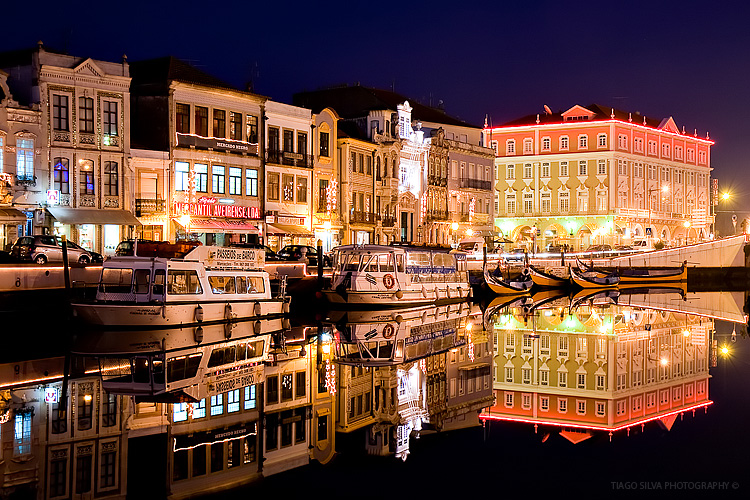
The district of Aveiro captures the essence of the perfect picture-book destination, with its colourful gondola-shaped boats, natural lagoons, elegant 19th Century architecture and traditional cobblestone passageways – this is a special place where old meets new.


Situated in the Baixo Vouga sub-region between the Atlantic Ocean and the mountainous surroundings of its neighbouring districts, Aveiro’s rich landscape is characterised by its sandy coast, beautiful estuary, gardens and parks.


Commonly nicknamed the ‘Portuguese Venice’, the enchanting capital city of Aveiro is crossed by a shimmering canal and is considered one of the most charming destinations in the country for its brightly patterned moliceiro boats, array of pastel-tinted Art Nouveau buildings and its calm urban atmosphere – a scenic backdrop for your holiday. While in the city centre, make your way to the famous Mercado do Peixe, a traditional fish market that houses one of Aveiro’s most acclaimed seafood restaurants. A variety of dining establishments, as well as a fun selection of bars and shops can all be found nearby. Stop at any typical café whenever strolling through the city and taste the heavenly ovos moles, the district’s sugary, egg-based delicacy. 


Also be sure to enjoy one of the many free-hire BUGA bicycles during your holiday and ride along Aveiro’s glistening canal, its picturesque streets and visit some of its foremost attractions. 
Travel further into the district and discover Ílhavo, a seaside city that represents Aveiro’s thriving maritime heritage and home to the internationally acclaimed Vista Alegre porcelain factory. See Portugal’s oldest lighthouse in Praia da Barra and stop by Praia da Costa Nova to find Aveiro’s iconic, multicoloured striped houses. These beaches are also excellent spots for soothing days in the sun and to enjoy an array of water sports. 
Taste the ‘convent sweets’ that the town of Arouca is so well-known for and visit the southern city of Mealhada to enjoy a traditional meal of suckling pig and regional Bairrada wine. To complete your holiday, find relaxation in Luso and Curia, two quaint towns known for their magnificent hot springs and natural beauty.


sexta-feira, 8 de junho de 2012

Portugal - Coimbra


Mondego river, Coimbra.
The little town of Portugal.
Steeped in history and long regarded as Portugal’s cultural and intellectual centre, the district of Coimbra is a timeless destination that has inspired the works of acclaimed poets and writers, a long-standing tradition of soulful Fado serenades and a truly unique legacy of high-spirited academic rituals.

Coimbra is spread before the lovely Mondego river (the longest in the country) and is located between the central Portuguese districts of Aveiro and Viseu.

Chronicled as the most historic city in the region, the capital of Coimbra cradles some of the district’s most revered customs and monuments. After years of Roman occupation and Medieval rule, traces of Coimbra’s earliest days are scattered throughout the district and can be found in the historical port town of Figueira da Foz, Montemor-o-Velho’s imposing 9th Century castle and the ancient ruins of Conímbriga.

At the city’s highest point, you will find the prestigious University of Coimbra and its majestic 18th Century library, as well as the enchanting Botanic Garden. Also sharing this hilltop location is the 16th Century New Cathedral (Sé Nova) and the popular Machado de Castro art museum.

With its countless steps leading down to the historic centre, the Quebra Costas stairway (literally ‘the backbreaker’) has become a landmark in its own right. Here, you will find dynamic streets filled with typical restaurants and bars, shops of all sorts and many cafés. The Old Cathedral (Sé Velha), the City Hall and the Santa Cruz Church are some of the main attractions in the area and definitely worth a visit.

Every year, Coimbra attracts visitors with its vivacious academic celebrations, where enthusiastic crowds of students proudly parade their black cloaks throughout the city’s streets, chant cheerful folk songs and fill the air with the sound of guitars playing melodious Fado tunes. One of the most popular traditions is the Queima das Fitas, a graduation ceremony that takes place every May, when students burn ribbons to symbolise the end of their academic days.

Another attraction well worth visiting is the popular Portugal dos Pequenitos theme park, located on the south side of the river; a wonderful place where visitors of all ages can explore small-scale replicas of typical Portuguese villages, national monuments and buildings. Also be sure to see the intriguing ruins of the nearby Santa Clara-a-Velha Monastery.

Universidade de Coimbra.


quinta-feira, 7 de junho de 2012

Portugal - North


A striking view of the walled citadel of Bragança.

Bragança
Bragança is the capital of the province of Trás-os-Montes in north-eastern Portugal. Unexploited by tourism, this remote, mountainous region offers beautiful scenery, historic towns, natural landscapes and rich local cuisine. Bragança lies on the edge of the Montesinho Natural Park – one of the wildest forested areas in Europe with a great diversity of fauna and flora.
Locals enjoy a strong traditional way of life, especially in small towns such as Miranda do Douro, Mogadouro, Torre de Moncorvo and Freixo de Espada à Cinta. Daily life has not changed for hundreds of years and these isolated stone villages retain a rustic beauty of their own. The region is especially beautiful in spring, when a white mantle of almond blossom covers the valleys. Nearby Mirandela is known for its cured meats and sausages, and you can find many delicious local specialties throughout the region.
The carnival celebrations in Trás-os-Montes are a vibrant and richly-honoured tradition. The festivities last for days preceding Ash Wednesday and feature colourful costumes, lively parades and traditional music, attracting happy revellers from all over the world.

Santuário do Bom Jesus do Monte, Braga. A grand Baroque stairway leads up to the 18th century neoclassical church.
Braga
Braga
Braga is situated in the heart of the fertile Minho province in north-western Portugal, surrounded by a gently rolling landscape of mountains and forests. One of Portugal's main religious centres, the city is renowned for its baroque churches, splendid 18th century houses and beautiful parks and gardens. The old city is solemn and antique, although industry and commerce have brought a modern way of life, complemented by local universities, contemporary restaurants and lively bars. On Thursday mornings, Braga hosts the largest market in the region, with stalls selling everything from fresh produce to traditional ceramics.
The city’s history is evident in its numerous churches and monuments, the principal landmarks including the striking Sé Cathedral and the 17th-century church of Santa Cruz. On a hill about 5 kilometres (3.1 miles) south-east stands the sanctuary of Bom Jesus do Monte, which is an important pilgrimage site. Beyond it is Mount Sameiro, where a colossal statue of the Virgin Mary overlooks the city. A short drive from Braga, the Citânia de Briteiros is an impressive archaeological site from the Iron Age.
Beautiful, wild beaches can be found along the coast in Esposende, Ofir and Apúlia. The whole district is famous for its festivals and local gastronomy, boasting traditional recipes include codfish (cooked in hundreds of different ways) and oven-roasted duck with rice.

Santa Luzia Basilica, Viana do Castelo. This impressive basilica was inspired by Romanesque, Byzantine and Gothic architecture.
Viana do Castelo is located at the mouth of the Lima river.
Viana do Castelo
Situated at the mouth of the Lima river, between the ocean and the mountains, the charming city of Viana do Castelo is steeped in tradition. Historically, the city was a crucial point of departure during the Age of Discovery, when many Portuguese explorers embarked to discover the unknown world.
Today, Viana do Castelo is a lively fishing port, renowned for its compelling architecture, featuring Manueline and Renaissance influences as well as innovative contemporary design. Below the hills of Santa Luzia, the narrow, winding streets are lined with beautiful palaces and houses constructed over the centuries. Visitors will also enjoy the beautiful Cabedelo beach across the Lima estuary.
Throughout the Minho province, many religious festivals and popular fairs are held throughout the year. Festivities in Viana do Castelo culminate in the middle of August with the celebration of the Romaria de Nossa Senhora d’Agonia, which dates back to the 18th century. For three days, the streets are filled with people enjoying the parade of floats, towering puppets and colourful local costumes, as well as traditional music and food. 
The nearby town of Ponte de Lima boasts a fine Roman bridge, a lively market and neighbourhoods of impressive rural mansions and old cottages. Along the Minho river, which separates Spain from Portugal, interesting border towns include Caminha, Valença, Monção and Melgaço. Other places to visit include the quaint towns of Paredes de Coura, Arcos de Valdevez and Ponte da Barca. Every two years, Vila Nova de Cerveira hosts a contemporary arts festival.

The impressive Guimarães castle is one of the city’s most famous landmarks.

This lovely fountain in Largo do Toural is located in the centre of Guimarães.
Guimarães
Situated in the district of Braga, the quaint city of Guimarães is one of Portugal’s most important historical destinations. Portugal’s first king, Afonso Henriques, chose this former Roman city to be the administrative capital of the Portuguese kingdom after his victory at the Battle of São Mamede in 1128. Known as the birthplace of the nation, Guimarães is a fascinating place to visit, with its proud castle and well-preserved medieval quarter. The city was declared an UNESCO World Heritage site in 2001.
This charming old town is a maze of narrow winding streets, flanked by old houses decorated with statues which lead to the impressive main square, Largo da Oliveira and the old Ducal Palace. For a true taste of the medieval atmosphere, visit Guimarães during the first weekend of August for the annual Festas Gualterianas (held since 1452), which features a medieval-style handicraft market, arts fair and lively costume parade.
Guimarães has been designated the European Capital of Culture for 2012 and will showcase a wide selection of concerts, events and exhibitions to celebrate this achievement.

Paço dos Duques de Bragança, Barcelos. The palace of the Dukes of Bragança is now an open-air archaeological museum.

The Cávado river runs through the charming medieval town of Barcelos.
Barcelos
Situated north of Porto, the city of Barcelos is known for its handmade ceramics, especially the Galo de Barcelos – a colourful cockerel which is acknowledged as an unofficial national icon and often used as a symbol of Portugal. The medieval walled town is situated on a hill above the Cavado river, its charming streets lined with baroque houses.
Every Thursday, the local market in Campo da República attracts tourists and visitors from all over the region. Feira de Barcelos is a decidedly rural affair, with stalls offering seasonal fruit and vegetables, homemade cheeses and beautiful ceramics, as well as all kinds of handicrafts featuring the trademark Barcelos cockerel.
Other local attractions include the Nossa Senhora do Terço church, the Centro do Artesanato de Barcelos (handicrafts centre) and the ruins of the 15th century Paço dos Duques de Bragança (Palace of the Dukes of Bragança), which have been transformed into an open-air archaeological museum. This site also features a cross which describes the story of Galo de Barcelos.

Casa de Mateus is depicted on the labels of the famous Mateus rosé wine.

Cruises along the Douro river are a unique way to see this beautiful region.

Ingeniously terraced vineyards in the Douro river valley.
Vila Real
Situated at the foothills of the majestic slopes of Serra do Marão, Vila Real is a small, lively city in north-eastern Portugal. Founded by King Dinis in 1289, Vila Real played an important role in the history of Portugal. It was the birthplace of Diogo Cão, the first explorer to reach the Congo river, and António da Silveira Pinto da Fonseca (known as the Count of Amarante), who was an influential member of the Portuguese military and lead numerous uprisings against the Liberal constitution. Many aristocrats built grand palaces here during the 16th and 17th centuries, befitting the city’s literal name, ‘royal villa’.
Vila Real is an ideal base for exploring the Douro river valley and following the famous Port Wine Route. Port wine begins its life in wine estates south of the city, planted in terraced vineyards along steep riverbanks. Early autumn is the best time to visit as many farms welcome visitors and you can watch the workers picking grapes, often singing while they work. For centuries, agriculture has been an important means of livelihood in this region.
There are many charming towns and villages near Vila Real, including Peso da Régua and Sabrosa, which boasts 15th century houses and vineyards set above the Pinhão river. Sample excellent wines throughout the region, including those from Mesão Frio and Murça, a town also known for its local honey, goat’s cheese and sausages. The historic city of Chaves is famous for its hot springs and the Roman bridge, which was built around AD 100. Also worth visiting are the nearby towns of Bisalhães, renowned for its unusual black pottery and Boticas, where you can taste the famous vinho dos mortos (wine of the dead), which is buried in deep cellars to mature.

sábado, 2 de junho de 2012

Portugal - Porto - North


Porto is an enchanting city, established on the hills at the mouth of the Douro river. Designated an UNESCO World Heritage site for its historic buildings and outstanding monuments, highlights of Portugal’s second largest city include the formidable Porto cathedral, the Torre dos Clérigos and the conspicuous Port wine lodges that dominate the hillside of Vila Nova de Gaia. Although largely industrialised, Porto offers a compelling synthesis of ancient and contemporary attractions.


The province is a thriving commercial and industrial hub, filled with charming villages and prosperous towns. Take a drive along the roastline, stopping to explore the cosmopolitan resort of Espinho, sample freshly-caught seafood in the port of Matosinhos or take a gamble at the dazzling Casino da Póvoa. Head inland to the beautiful city of Amarante to try delicious pastries called papos de anjo and enjoy a stroll along the Tâmega river, which is lined with 17th century mansions.


Caves do Vinho do Porto (Port wine cellars) (Vila Nova de Gaia)
Opposite the centre of Porto, on the southern bank of the Douro river, numerous Port wine lodges are a prominent tourist attraction. This sweet, fortified wine is produced from grapes grown in the Douro region and transferred to the cellars of Vila Nova de Gaia where it is blended and aged. Visitors can spend days touring the cavernous cellars along the waterfront (there are over 50 to choose from), while sampling dozens of world-class port varieties. 

Sé Catedral
Porto’s imposing cathedral was completed in the 13th century, although many aspects of the design have changed over the centuries. Featuring ornate carvings, paintings, sculptures and sacred religious treasures, as well as a marble chapel, a Romanesque rose window and intricate baroque azulejos throughout the cloister and terrace, the cathedral’s mesmerising grandeur is truly breathtaking.


Torre dos Clérigos (Tower of the Clergy)
This baroque bell tower was completed in 1763 and looms high above the city. The tallest in Portugal, visitors can climb the 225 steps to enjoy the spectacular panorama. The adjoining oval-shaped Igreja dos Clérigos is an outstanding example of the synthesis of baroque and rococo architectural styles, featuring an intricate façade, elaborate engravings and a remarkable pipe organ dating back to 1774.


Casa da Música 
Conceived to mark Porto’s status as European Cultural Capital in 2001, Casa da Música is a dynamic modern concert hall dedicated to the creation and celebration of music. This cultural centre also offers guided tours and workshops and contains a restaurant and bars where visitors can relax. The myriad events range from jazz to classical performances, international DJs to world music.

Palácio da Bolsa (Former stock exchange)
Featuring an impressive neoclassical façade, this striking former stock exchange was built in the 19th century. The building resembles a royal palace, particularly the ornate Arabian Hall (a replica of the Alhambra Palace in Grenada), which is used as a reception room for visiting heads of state. The palace has been majestically embellished with sculptures, paintings and frescos by numerous Portuguese masters and visitors can also attend cultural events and exhibitions, or enjoy a meal at the restaurant.

Museu de Serralves (Museum of Contemporary Art)
Surrounded by the extensive Serralves gardens, which is also used as an outdoor exhibition area, the Museu de Serralves was designed by renowned Portuguese architect Álvaro Siza Vieira. Featuring an outstanding collection of national and regional contemporary art dating from the 1960s, the museum also hosts a selection of cultural events, including concerts and educational workshops for children.

Antiga Cadeia da Relação (Old Relação Prison)
This austere former prison is one of the landmark buildings in the history of Porto. Built in 1765, the triangular-shaped structure also housed the Court of Appeal. Numerous Portuguese personalities passed through the cells of this prison, including writer Camilo Castelo Branco, who wrote his famous romance Amor de Perdição while incarcerated. Since 2001, the building has been home to the Portuguese Centre for Photography, and still retains many original features.


Edifício do Instituto do Vinho do Porto (Institute for Port and Douro wines)
The Institute for Port and Douro wines is situated in the heart of Porto’s historic centre and is responsible for ensuring the quality and authenticity of Douro wines. Marble memorial stones in the entrance hall commemorate important dates and events in the history of local wine production and visitors can also learn about the complex process of making port.

Jardim de São Lázaro (São Lázaro Garden)  
The São Lázaro Garden is the oldest municipal garden in Porto, dating back to 1834. The extensive grounds are filled with ancient lime, magnolia and acacia trees, as well as historic monuments including a gazebo and marble fountain, which once belonged to the São Domingos convent.

Jardim do Passeio Alegre (Passeio Alegre Garden)
Situated along the banks of the Douro river, the oldest trees in these immaculately landscaped gardens were planted in 1870. The monumental fountain by Nicolau Nasoni is a national monument and the Chalé Suíço kiosk was a meeting place for intellectuals in the late 19th century. Featuring romantic avenues lined with palm trees, ancient araucarias and a wealth of diverse plant life, the splendour and poetic beauty of these gardens are beloved to local inhabitants.


segunda-feira, 28 de maio de 2012

PORT WINE - Portugal


A glass of tawny port.


Aging in wooden barrels.

Rabelos, a type of boat traditionally used to transport barrels of port down the River Douro for storage and aging in caves at Vila Nova de Gaia near Porto.


The vineyards that produce port wine are common along the hillsides that flank the valley of the River Douro in northern Portugal.

Port wine is a Portuguese fortified wine produced exclusively in the Douro Valley in the northern provinces of Portugal. It is typically a sweet, red wine, often served as a dessert wine, and comes in dry, semi-dry, and white varieties. Fortified wines in the style of port are also produced outside Portugal, most notably in Australia, South Africa, Canada, India, Argentina, and the United States. Under European Union Protected Designation of Origin guidelines, only the product from Portugal may be labelled as port or Porto.  In the United States, wines labelled "port" may come from anywhere in the world, while the names "Dão", "Oporto", "Porto", and "Vinho do Porto" have been recognized as foreign, non-generic names for wines originating in Portugal.

Port is produced from grapes grown and processed in the demarcated Douro region. The wine produced is then fortified by the addition of a neutral grape spirit known as aguardente in order to stop the fermentation, leaving residual sugar in the wine, and to boost the alcohol content. The fortification spirit is sometimes referred to as brandy but it bears little resemblance to commercial brandies. The wine is then stored and aged, often in barrels stored in a cave (pronounced kah-vee and meaning "cellar" in Portuguese) as is the case in Vila Nova de Gaia, before being bottled. 

The wine received its name, "port", in the latter half of the 17th century from the seaport city of Porto at the mouth of the Douro River, where much of the product was brought to market or for export to other countries in Europe. The Douro valley where port wine is produced was defined and established as a protected region, or appellation in 1756, making it the oldest defined and protected wine region in the world. Chianti (1716) and Tokaj (1730) have older demarcation but no regulation associated and thus, in terms of regulated demarcated regions, Porto is the oldest.

sexta-feira, 25 de maio de 2012

Wonderful Portugal 1


There's so much to see - varied landscapes, historic towns and cities, nature reserves and parks, mountains and beaches... all so close at hand! If you think we're exaggerating, find out for yourself.

terça-feira, 22 de maio de 2012

Portugal - The Beauty of Simplicity


See the film of Portugal and discover the beauty of simplicity.

Portugal national shrine of our Lady of Fátima


Our Lady of Fátima is a famous title given to the Blessed Virgin Mary as she appeared in apparitions reported by three shepherd children at Fátima in Portugal. These occurred on the 13th day of six consecutive months in 1917, starting on May 13. The three children were Lúcia dos Santos and her cousins Jacinta and Francisco Marto.

domingo, 20 de maio de 2012

Culture of Portugal II

Some important personalities from Portugal

António de Oliveira Salazar – Statesman, dictator between 1932 and 1968
Álvaro Cunhal – Politician
Aristides de Sousa Mendes – Diplomat
Afonso I – King
Luís Vaz de Camões – Poet
John II – King
Henry the Navigator – Prince
Fernando Pessoa – Poet
Marquês de Pombal – Politician
Vasco da Gama – Explorer
Salgueiro Maia  - Military chief
Mário Soares- Former President of the Republic
Saint Anthony of Lisbon - Saint
Amália Rodrigues - Fado singer
Eusébio - Football player
Francisco Sá Carneiro - Politician
Jorge Nuno Pinto da Costa - President of Futebol Clube do Porto
Nuno Álvares Pereira - Strategist and general
José Mourinho - Football team manager
Agostinho da Silva - Philosopher
Egas Moniz - Doctor, first Portuguese to win a Nobel Prize
Cavaco Silva - President of the Portuguese Republic, former Prime Minister
Humberto Delgado - Military officer and politician
Luís Figo - Football player
Father António Vieira - Writer and preacher
Ferdinand Magellan - Navigator
John I of Portugal - 10th king of Portugal
António Damásio - Scientist
Manuel I of Portugal - 14th king of Portugal
José Saramago - Nobel-laureate writer
Elizabeth of Aragon - The Saint Queen, queen consort of Portugal
Pedro Álvares Cabral - Navigator who discovered Brazil
Álvaro Siza Vieira - Architect
Mariza - Fado singer
Rosa Mota - Athlete
Cristiano Ronaldo - Football player
Bocage - Poet
Pedro Hispano - Pope John XXI
Damião de Góis - Humanist writer and humanist
Paula Rego - Painter

Culture of Portugal


The culture of Portugal is the result of a complex flow of different civilizations during the past Millennia. From prehistoric cultures, to its Pre-Roman civilizations (such as the Lusitanians, the Gallaeci, the Celtici, and the Cynetes, amongst others), passing through its contacts with the Phoenician-Carthaginian world, the Roman period (see Hispania, Lusitania and Gallaecia), the Germanic invasions and consequent settlement of the Suevi and Buri (see Suebic Kingdom of Galicia) and the Visigoth (see Visigothic Kingdom), and, finally, the Moorish Umayyad invasion of Hispania and the subsequent Reconquista, all have made an imprint on the country's culture and history.

The name of Portugal itself reveals much of the country's early history, stemming from the Roman name Portus Cale, a Latin name meaning "Port of Cale" (some argue that Cale is a word of Celtic origin, which also means port or harbour), later transformed into Portucale, and finally into Portugal, who emerged as a county of the Kingdom of León (see First County of Portugal and Second County of Portugal) and became an independent kingdom in 1139. During the 15th and 16th centuries, Portugal was a major economic, political, and cultural power, its global empire stretching from Brazil to the Indies.

Portugal, as a country with a long history, is home to several ancient architectural structures, as well as typical art, furniture and literary collections mirroring and chronicling the events that shaped the country and its peoples. It has a large number of cultural landmarks ranging from museums to ancient church buildings to medieval castles, which testify its rich national cultural heritage.

The Portuguese participate in many cultural activities, indulging their appreciation of art, music, drama, and dance. Portugal has a rich traditional folklore (Ranchos Folclóricos), with great regional variety. Many cities and towns have a museum and a collection of ancient monuments and buildings. Many towns have at least a cinema, some venues to listen to music and locations to see arts and crafts. In the larger cities visits to the theatre, concerts or galleries of modern exhibitions are popular, and Portugal can boast not only international-scale venues in Lisbon, Porto, Braga, Guimarães and Coimbra but also many acclaimed artists from various disciplines. The importance of the arts is illustrated by the fact that on the death of Amália Rodrigues, the "Queen of Fado" (fado is Portugal's national music) in October 1999, three days of national mourning was declared. In 1998, José Saramago, one of Portugal's well-known writers, was awarded the Nobel Prize for literature. In 2001, Porto was European Capital of Culture, contributing to a current renaissance in artistic creation, and in 2004 Portugal hosted the European football finals in specially constructed stadiums.

In smaller towns and villages, cultural activity may revolve around local folklore, with musical groups performing traditional dance and song. Local festivities are very popular during the summer season in all kinds of localities ranging from villages to cities, as well as beach holidays from July to September. Portuguese people in almost all major towns and the cities like to go shopping in malls which are generally well equipped with modern facilities and offer a wide variety of attractions ranging from shops and stores of the most renowned brands to cinemas, restaurants and hypermarkets. Café culture is also regarded as an important cultural feature of the Portuguese. As the most popular sport, football events involving major Portuguese teams are always widely followed with great enthusiasm. There are a number of bullrings in Portugal, although the passion for bullfighting varies from region to region.


sexta-feira, 18 de maio de 2012

UNESCO Heritage Portugal


Historic Centre of  Angra do Heroísmo

The Centro Histórico de Angra do Heroísmo is an historic centre located in the city of Angra do Heroísmo, the island of Terceira in the Azores Islands. It is a port with large importance between the 15th and the 19th centuries. The fortifications of São Sebastião and São João Baptista of the 16th century are the only examples of military architecture. It was destroyed by an earthquake that took place on the January 1, 1980, the city was later rebuilt. It was listed in 1984.


Jerónimos Monastery

The Hieronymites Monastery is located near the shore of the parish of Belém, in the municipality of Lisbon, Portugal. The monastery is one of the most prominent monuments of the Manueline-style architecture (Portuguese late-Gothic) in Lisbon, classified in 1983 as a UNESCO World Heritage Site, along with the nearby Tower of Belém.


Belém Tower

Belém Tower or the Tower of St Vincent is a fortified tower located in the civil parish of Santa Maria de Belém in the municipality of Lisbon, Portugal. It is an UNESCO World Heritage Site (along with the nearby Jerónimos Monastery) because of the significant role it played in the Portuguese maritime discoveries of the era of the Age of Discoveries. The tower was commissioned by King John II to be part of a defense system at the mouth of the Tagus River and a ceremonial gateway to Lisbon.
The tower was built in the early 16th century and is a prominent example of the Portuguese Manueline style, but it also incorporates hints of other architectural styles. The structure was built from lioz limestone and is composed of a bastion and the 30 meter (100 foot), four story tower. It has incorrectly been stated that the tower was built in the middle of the Tagus and now sits near the shore because the river was redirected after the 1755 Lisbon earthquake. In fact, the tower was built on a small island in the Tagus River near the Lisbon shore.


Batalha Monastery

Mosteiro Santa Maria da Vitória, more commonly known as the Batalha Monastery, is a Dominican convent in Batalha, in the District of Leiria, Portugal. It is one of the best and original examples of Late Gothic architecture in Portugal, intermingled with the Manueline style.


Convent of Christ (Tomar)

The Convent of the Order of Christ is a religious building and Roman Catholic building in Tomar, Portugal, originally a Templar stronghold built in the 12th century. After the Order of the Knights Templar was dissolved in the 14th century, the Portuguese branch of the order was turned into the Knights of the Order of Christ, which supported Portugal's maritime discoveries of the 15th century.


Historic Centre of Évora


Alcobaça Monastery

The Alcobaça Monastery  is a Mediaeval Roman Catholic Monastery located in the town of Alcobaça, in central Portugal. It was founded by the first Portuguese King, Afonso Henriques, in 1153, and maintained a close association with the Kings of Portugal throughout its history. The church and monastery were the first Gothic buildings in Portugal, and, together with the Monastery of Santa Cruz in Coimbra, it was one of the most important of the mediaeval monasteries in Portugal. Due to its artistic and historical importance, it was listed by UNESCO as a World Heritage Site in 1989.


Cultural Landscape of Sintra


Historic Centre of Oporto

The historic center of Porto is the oldest area of Porto, Portugal, classified as World Cultural Heritage since 1996. Corresponds to the urban fabric marked by the medieval origins of the city and includes territories in the parishes of the Cathedral of St. Nicholas, Victory and Miragaia. Despite all the trends and changes over time that occurred in the historic center of Porto, still observing the urban ensemble which is based in the old medieval part provides an image of consistency and homogeneity. Suggests immutability and permanence in time, thus providing a unique example of an urban landscape endowed with identity, strong character and aesthetic quality.


Prehistoric Rock-Art Site of the Côa Valley

The Prehistoric Rock-Art Sites of the Côa Valley are open-air Paleolithic archaeological sites located in a region of northeastern Portugal, along the Portuguese-Spanish border. In the late 1980s, the engravings were discovered in Vila Nova de Foz Côa. The site in situated in the valley of the Côa River, and comprises thousands of engraved drawings of horses, bovines and other animal, human and abstract figures, dated from 22,000 to 10,000 years BCE. Since 1995 a team of archaeologists have been studying and cataloging this pre-historical complex and a park was created to receive visitors.


Laurisilva

Laurisilva or laurissilva is a subtropical forest, found in areas with high humidity and relatively stable and mild temperatures. They are characterised by evergreen, glossy-leaved tree species that look alike with leaves of lauroid type. The members of the Laurel family (Lauraceae) could be prominent, or in association. In Spanish, the word "laurisilva" is used for every laurel forest: Laurisilva misionera, laurisilva valdiviana, Macaronesian Laurisilva etc, even in African an Asian countries of Iberian background.
Many botanical species have similar foliage to the Lauraceae due to convergent evolution. Plants of the laurel forests must adapt to high rainfall and humidity. The trees adapted by developing leaves that repel water. Laurophyll or lauroide leaves are characterized by a generous layer of wax, making them glossy in appearance, and narrow, pointed oval in shape with an apical mucro, or 'drip tip', which permit the leaves to shed water despite the humidity, allowing perspiration and respiration from plant.


Historic Centre of Guimarães

The historic city of Guimarães is associated with the emergence of the Portuguese national identity in the twelfth century. It is an exceptionally well preserved example of the evolution of a medieval town to a modern city with a rich typology edificativa to show the development of Portuguese architecture from the fifteenth and nineteenth centuries with continued use of techniques and traditional building materials.


 Alto Douro wine region

The wine region of Alto Douro and Alto Douro Wine Region is an area of northeastern Portugal with more than 26,000 hectares, classified by UNESCO on December 14, 2001, as World Heritage in the category of cultural landscape and surrounded by mountains give individuals and climatic characteristics mesological. This region, which is bathed by the Douro River and forms part of a Douro wine region, producing wine for over 2000 years, including the world famous Port wine.


Landscape of the Pico Island Vineyard Culture

The Landscape of the Pico Island Vineyard Culture is a Unesco World Heritage Site. The vineyard is divided into plots (currais) protected by walls (paredes, murinhos). The walls are built with basalt blocks that have been weathered and broken up and stacked without mortar. Viticulture dates back to the 15th century.